
Last Updated on December 28, 2024
How did I discover why I imitated people around me subconsciously as a teenager and young adult? I attempted to fill the void left by an emotional meltdown occurring in my late 20s, but whatever I did was in vain.
In How A Social Work Graduate Became A Mental Wellness Advocate, I quoted a teacher of mine who encouraged all future helping professionals to go through self-discovery processes properly. Although I have made “going on self-discovery journeys” a habit since the age of 18, as the proverb goes, “you can’t see the picture when you’re in the frame”, I was only able to rationalize my behaviours by believing “I was just young and immature” at that time.
Why Was I So UnHappy With My Choices?
Because I didn’t really make choices based on my desires. I made decisions merely to make others happy. For example, I learned at a young age that I needed to “earn love” from my parents. It sounds distorted and inconceivable to me in the present, but it was my only mission as a child.
With that in mind, I compromised almost everything my entire life before I turned 24. There was one thing I never did settle for was food. That probably could explain why travelling and food meant so much to me as a child and youth. My happiest memory from childhood was during those family trips with my maternal relatives and family friends. I remember being reluctant to come back to reality as the time there was symbolic of freedom.
The discovery
“…I was a chameleon when I was an adolescent.”
One day out of nowhere, I discovered how tense I actually was growing up as a so-called popular kid after having a conversation with my best friend – and believe it or not, I never once enjoyed the power and attention.
It occurred to me that my best friend had always known I was different. He described me as someone straightforward, expressive and maybe a little rebellious on occasion. I still remember vividly the moment I discovered the “true feeling” of how I really grew up – I felt an incredible sense of relief. Knowing that I was not a people pleaser (but a chameleon trying hard to fit in society and gender expectations) helped piece my life back together.
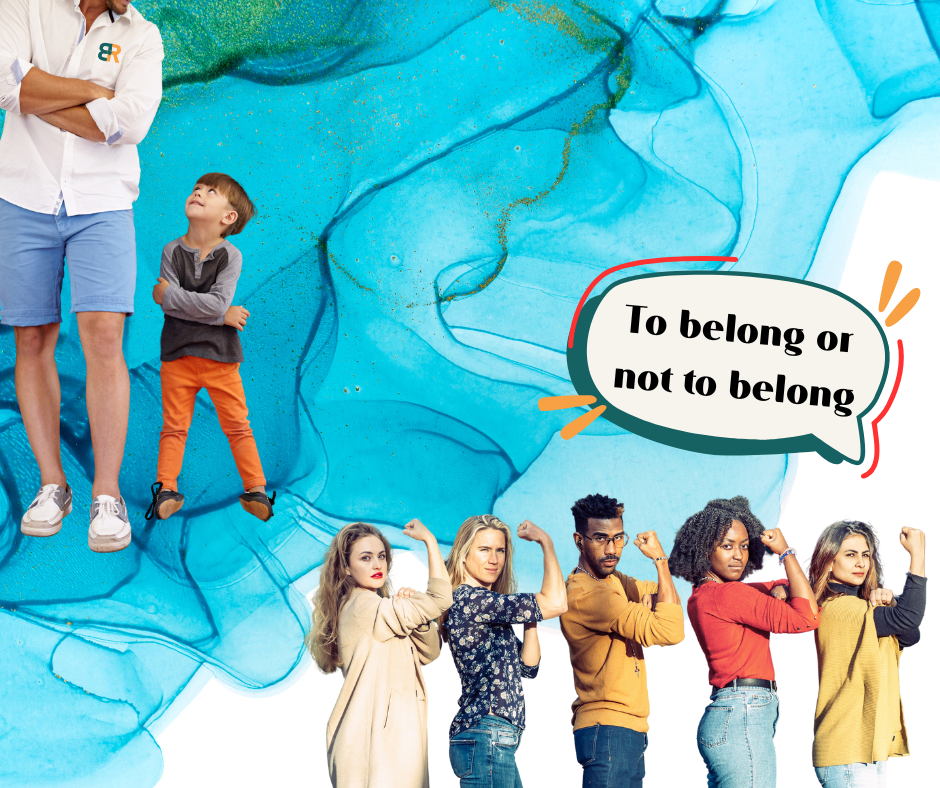
To belong or not to belong
I never used to feel I was myself because I imitated people around me to fit in society. Whether it is to look skinny or only study “feminine subjects” defined by a male who believed in following in the footsteps of his ancestors. In other words, a person’s happiness and success are defined by a patriarchal society.
While studying social sciences was never my first choice, the journey of becoming a mental health professional and working in the mental health industry was a lifesaver. I regained the power – that I didn’t know existed – that was once lost. Among all psychological branches, what interests me the most has always been social psychology, especially understanding and analyzing human behaviours.
“Your perception of me is a reflection of you”
The chameleon effect means when an individual imitates the postures, facial expressions and mannerisms of the people whom this person interacts with unconsciously (Chartrand & Bargh, 1999).
For a long time, mimicking others’ behaviour was the way to feel I belonged somewhere. I am glad I freed myself and chose to step out of the silo completely.
a sense of relief after finding my own voice
It had been quite a journey to find my own voice and truly live the life I always wanted. Starting a business (view Berelevant Network‘s latest egift cards here) was never on my bucket list, and yet it’s been helping many and will continue to change lives. The process of setting up a business is a story for another day. In a nutshell, I had to leave my comfort zone numerous times before I could make sense of my choice. But it’s absolutely worth it!
By reading this article, I hope you can be empowered to go on your self-discovery journey regardless of your age, gender, sexual orientation and social status. Reaching the peak and achieving peace of mind isn’t a dream. With the right support/tool, you can become the person (except for inflicting unlawful activities on others) you wished for. You have one life, so make sure you are living the one you desire.
Reference
Chartrand, T. L., & Bargh, J. A. (1999). The chameleon effect: The perception–behavior link and social interaction. Journal of Personality and Social Psychology, 76(6), 893–910. https://doi.org/10.1037/0022-3514.76.6.893
READ MORE: Subscribe now and we will keep you updated! This is NOT an email marketing subscription.



Comments